Bucha
The former city center of Bucharest is now the residential area of the rich. A high wall and border guards ensure that Bucha is separated from the outer district. Passing the wall without permit results in instant execution.
Size: 6,5km² Population: 3,560 inhabitants per km²
Citymap

Locations
| Location | Description |
|---|---|
| Lake Mori | Lake Mori is a reservoir that provides the drinking water for residents in Bucha. There is a water purification plant at lake Mori that processes the accidic rain water that is collected in the lake. It is not connected to any rivers (anymore). |
| Public Bath | Because houses do not have a regulated water supply and clean water is scarce resource, citizens can only clean themselves in designated cleaning stations. The public bath is the biggest cleaning station in Bucha and a popular place for citizens to meet up. |
| University | Where the protagonist and his friend [[Izmael (Izzy) Dvorak]] study energy development at the faculty of energy engineering. |
| Trading Station | This is where the goods produced in The Factory are imported into Bucha. The former train station has very high security as it is a popular place for illegal immigration. |
| Botanic Garden | This is where the biology research institutes of Bucha cultivate a wide variety of genetically manipulated plants. |
| Garrison HQ | Headquarter of the police and border guards. |
| Parliament | The biggest building in Bucha is also the residence of the administration of Bucha. |
| Old Town Ghetto | This is where people of the lowest social class ("greens") live. The buildings in this area are mostly old brittle. |
Infrastructure
There is a single bus route throughout the city that can be used by all residents. Aside from the public bus, there are no private vehicles, so people either walk or use shared e-scooters. There is a limited number of cars that are exclusively used by the border guards. The roads are usable, but are torn up in a lot of places (like after an earthquake).
Education
There are four school institution, two of which are mandatory.
As long as a child is in education, the social class of the parents applies to the child, meaning all social classes have access to the same education. Only after a child finishes education, is a social class assigned to them. For more information baout social classes, see Society.
Pre-School
Children can enter pre-school as early as 3 years old. Attending is mandatory for children of ages 5 to 6. The main purpose of pre-school is to preprare children for primary school and to "weed out" children with learning diabillities. Officially children deemed "not ready for primary school" at age 6 are sent to a special care facility that accomodates their learning disbilities. That said, after the transfer, most of these children do not appear in any official records anymore.
Primary School
Every child from age 6 to 10 is required to attend primary school. The goal of primary school is to equip children with the tools they’ll need to succeed academically and in life. They learn to read, write, speak, listen, and deduce. They also know how to operate together as a team.
Gymnasium (Middle School)
Every teenager from age 11 to 15 is required to attend middle school. The goal of middle school is to determine the aptitude of students using standardized tests. Based on the results students are assigned a career path at the end of middle school. Around 30% of students finish their education and start vocational training for manual labour jobs. These students automatically fall into the lowest social class and are required to wear green uniforms. The other 80% advance to secondary school.
Lyceum (Secondary School)
The teenagers who get admitted to secondary school get divided into sets of separate courses geared toward their personal aptitudes. The courses include mathematics, biology & chemicstry, engineering & mechanics, physics, computer science, economics & administration, health. The courses prepare students for their future university track. At this point, students can attent multiple courses or even change courses in response to the results of their regular aptitude rests. At the end of secondary school, around 25% of students are "degraded" to manual labor jobs. The other students are divided into highly specialized university faculties.
University
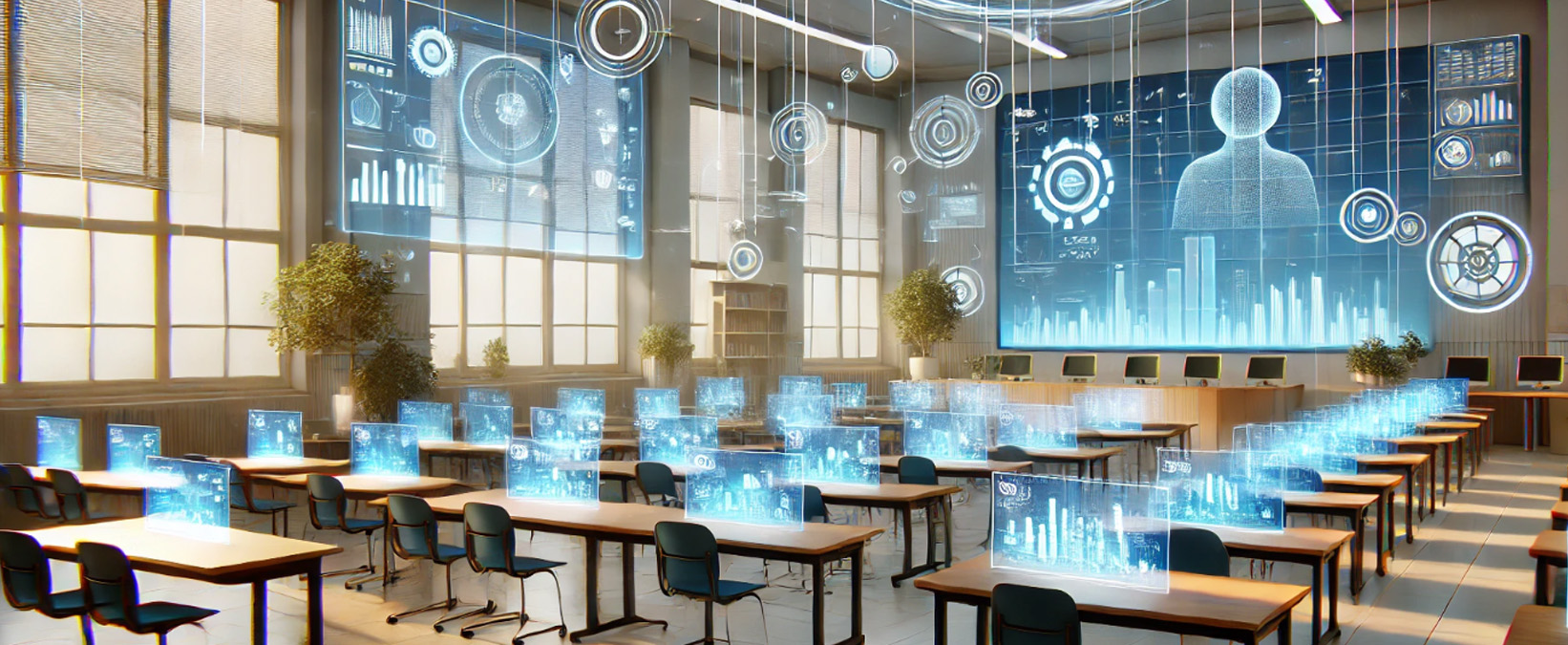
Citizens enter university right after secondary school if they are admitted to one of the university courses. The number of students that can attent courses is limited depending on the governments estimate of needed workers the courses produce. As the university conforms to the economic situation in Bucha, the university focuses on industrial/mechanical engineering, power engineering, biotechnology and chemical engineering. Social sciences and creative courses are not offered. There are regular tests and research projects to make sure the students meet the standard. Students who regularly fail tests are "degraded" to another career path. Students that accel in certain aspects can be assigned to courses that better match their aptitude.
Faculties:
- Faculty of Administration
- Faculty of Automatic Control and Computer Science
- Faculty of Health
- Faculty of Power Engineering
- Faculty of Electronics, Telecommunication and Information Technology
- Faculty of Mechanical Engineering and Mechatronics
- Faculty of Biotechnical Systems Engineering
- Faculty of Applied Chemistry and Materials Science
- Faculty of Medical Engineering
Laws
Violating laws results in exile or a transfer to the "correction institute" in Rest.
Major offenses:
- Not authorized passing of the border
- Posession of items that are not produced by The Factory or officially approved of by the government
- Boycotting education
- Removal of the RFID earring
Minor offenses:
- Drinking rain water (because the rain water contains acid)
- Controversal statements against the government and it's institutes
Law Enforcement
Garisson,...
Under construction...
Economy & Resources
Due to the scarcity of resources, Bucha enforces a planned economy.
Government approved products are produced in The Factory in [[Rest]]. All products incorporate the logo of the government.
Water Supply
The water supply is ensured by collecting the accidic water from the atmosphere and the used water from the public gleaning stations and then purifying the water in the water purification plant at Lake Morii.
Food Supply
The main source of food is genetically enhanced soy and corn that is grown in [[Rest]] and then imported into Bucha. A lot of research in Bucha focuses on improving the crops. A predefined amount of food (protein bars, supplements and corn bread and soy bread) is distributed once a day to every citizen. The citizens are free to eat their portions throughout the day or trade / give away their food.
Vertical Farming Center
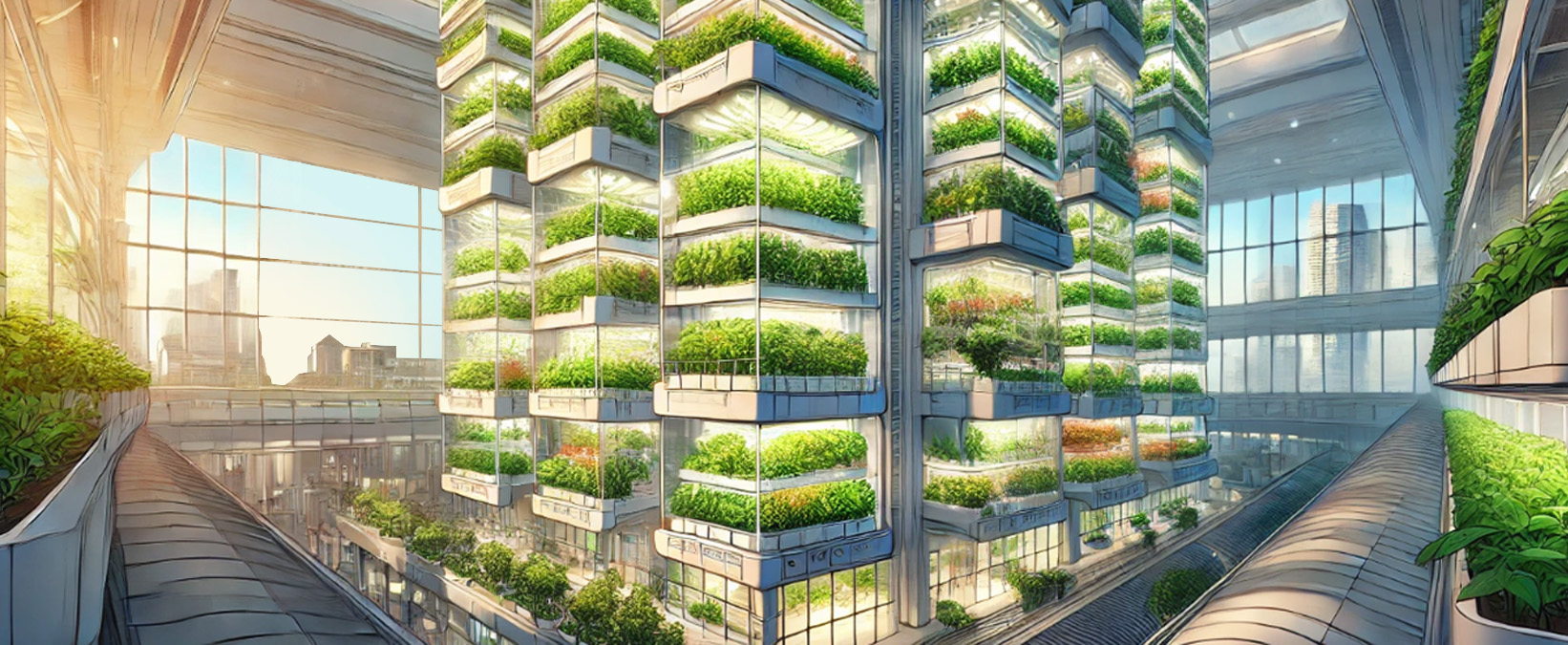
A vertical farm is an indoor agricultural system that grows crops in stacked layers, often inside buildings, shipping containers, or greenhouses. It uses hydroponics, aeroponics, or aquaponics instead of soil, supplying plants with nutrient-rich water or mist. Controlled LED lighting, temperature, humidity, and CO₂ levels create an optimal growing environment, allowing for year-round production. Vertical farms save space, use less water than traditional farming, and reduce transportation costs by being located closer to urban areas. However, they require high energy inputs and advanced technology to maintain efficiency.
Electricity
The electricity in Bucha produced by a combination of atmospheric electricity, solar energy and wind energy. The electricity is concentrated around 3 Neo-Wadenclyffe Towers that transmit the energy wirelessly throughout the city.
Environment & Nature
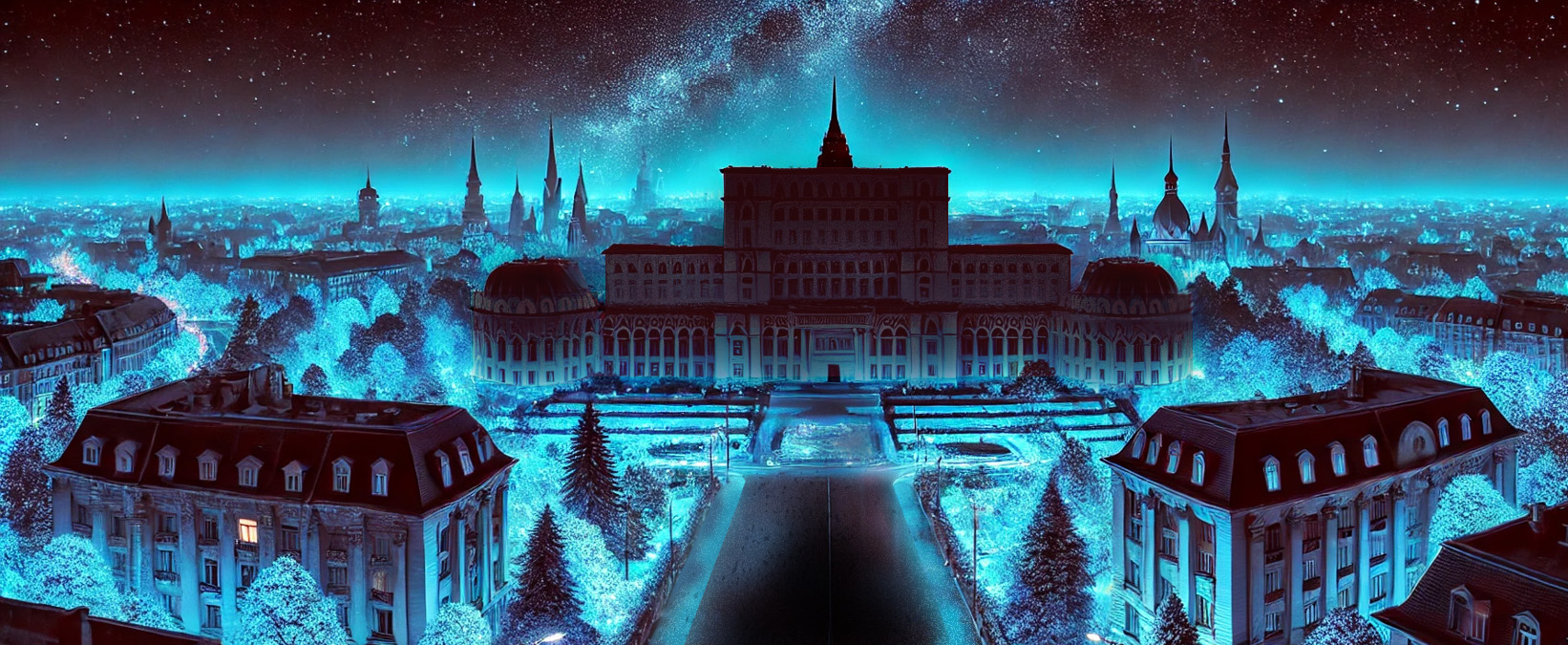
The atmosphere in Bucha is dense and the rain contains small doses of acid. To withstand these conditions, almost all flora and fauna inside Bucha are genetically altered by the Ministry of Biodiversity in their biology lab. The most prominent example are the bioluminscent trees and bushes spread throughout the city that provide light during the night.
Society
There are 3 social classes in Bucha. The social class determines housing and distribution of resources. Children adopt the social class of their parents up until the age of 18. Once turned 18, the social class is determined by educational accomplishments. All citizens of all social classes are required to wear an earring that contains an RFID chip.
Greens
The lowest social class consists of plumbers, cleaners, seamstresses and other lower education jobs. Citizens of the green social class wear green turtle neck shirts and usually live in the old town ghetto of Bucha.
Blues
The middle class consists of citizens with a higher education. The majority of citizens belong to the middle class and wear a light blue turtle neck shirt.
Royal Blues
The highest social class only consists of 15 people: high officials, researchers and engineers that were able to make extraordinary contributions to society. As the highest social class, royal blues enjoy rare luxuries, like (real) meat, a car service (if requested) and spacious housing.
Political Landscape
At the top of the government is the mayor of Bucha, Alexandru Glandesh. The mayor together with the heads of the ministries reside in the Parliament building in Bucha.
The following ministries exist
| Ministry | Tasks |
|---|---|
| Ministry of Public Security | Oversees the activities of the Garisson, ... |